
Can I Send Bulk SMS to DND Numbers in Nigeria?
Can I Send Bulk SMS to DND Numbers in Nigeria?
If you’ve ever tried running a bulk SMS campaign in Nigeria only to discover that some of your messages never reached certain customers, you’re not alone. Many business owners from small fashion boutiques in Aba to thriving fintech startups in Lagos have faced this challenge. It often happens because the recipient’s number is on the Do-Not-Disturb (DND) list, a service designed to block promotional or marketing messages.
But here’s the real question: Can you actually send bulk SMS to DND numbers in Nigeria without breaking any telecom rules?
Let’s dive into the full story of what DND really means, why it exists, and the smart and legal ways your business can still connect with customers effectively.
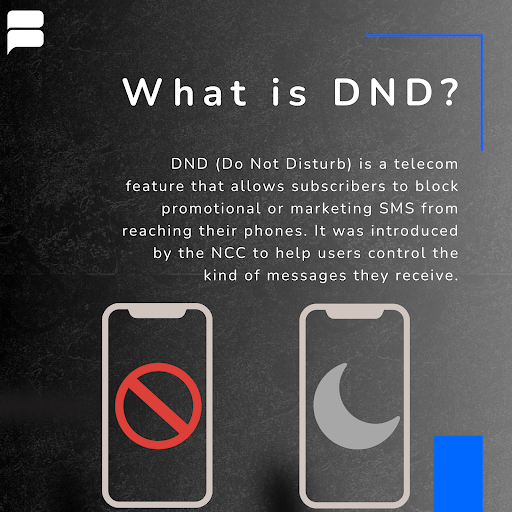
In 2016, the Nigerian Communications Commission (NCC) introduced the Do-Not-Disturb (DND) policy to help Nigerians control unwanted marketing messages. Before then, many mobile users were bombarded daily with unsolicited SMS from unknown brands from “promo alerts” to “betting offers.”
To fix this, the NCC gave subscribers the power to block such messages by activating DND on their lines. It’s as simple as texting “STOP” to 2442 and instantly, their number becomes shielded from most marketing SMS.
However, here’s where it gets tricky for businesses:
When you send bulk SMS in Nigeria, if your customer’s number is on DND, your message may never reach them even if they’ve willingly shared their contact with you.
This regulation protects users, but it also challenges businesses that genuinely want to communicate responsibly.
Types of DND Settings in Nigeria
Not all DND activations are the same. In fact, the NCC allows two main options: full DND and partial DND. Knowing the difference is crucial if you rely on SMS for marketing or notifications.
Full DND:
- The user blocks all bulk or promotional SMS.
- Only person-to-person messages or alerts from banks and government agencies go through.
Partial DND:
The user still receives messages from selected categories (e.g., health, banking, or education). For example, a parent with partial DND can still receive school alerts or health campaign messages but not marketing promos.

Why it matters: If your audience mostly uses full DND, even your most creative campaign won’t reach them. But with partial DND users, you may have some delivery success depending on message type and sender ID classification.
Can You Send Bulk SMS to DND Numbers?
Here’s the straightforward answer: Yes, but with conditions.
Businesses can send messages to DND numbers in Nigeria only if they comply with NCC regulations and use approved sender routes. In other words, you can’t use just any bulk SMS platform. You need one that provides DND delivery routes that are often called “Corporate Routes” or “Transactional Routes.”These routes are designed for non-promotional messages like:
- Bank alerts or payment confirmations.
- School announcements or exam results.
- Church notifications or event reminders.
- Health and safety alerts.
If your message falls into these categories, it can legally bypass DND restrictions and still deliver to your recipients.
However, for marketing messages or promotional content (like “50% off sale” or “Buy now”), DND restrictions still apply unless the recipient has opted in and granted permission.
Marketing Permissions and Customer Consent
The key to ethical and effective SMS marketing in Nigeria is permission. The NCC and telecom providers encourage businesses to get clear consent from users before sending any promotional content.
Here’s how to do it right:
- Ask for permission upfront. When customers sign up or provide their numbers, include a checkbox asking if they’d like to receive promotional updates.
- Allow easy opt-out options. Every SMS campaign should end with an option like “Reply STOP to unsubscribe.”
- Keep a permission record. Maintain logs of customer consent to protect your business if there’s ever a complaint.
Doing this not only helps with compliance but also builds trust and credibility essential traits for customer retention.
Why Many Nigerian Businesses Still Struggle with DND Restrictions
Imagine this: a real estate firm in Abuja sends an SMS campaign announcing a new housing offer. They invest in 10,000 messages, but only 6,000 are delivered. The remaining 4,000? Blocked by DND.
What went wrong?
- They used a cheap bulk SMS service with no DND delivery route.
- Their messages were classified as promotional content without proper permissions.
- They didn’t segment their audience or verify delivery reports.
For many Nigerian businesses, these mistakes are costly. Poor delivery rates mean wasted funds and missed customer opportunities.
How Parrotica Helps Businesses Overcome DND Barriers
At Parrotica, we believe in “messaging that means business.” Our platform is built with direct telecom integrations to ensure reliable SMS delivery even when DND restrictions apply.
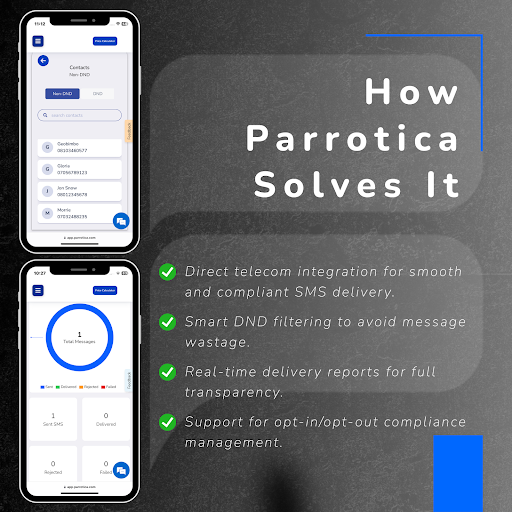
Here’s how we make it work:
- Smart Routing: Parrotica automatically detects DND numbers and routes messages through approved transactional gateways when applicable.
- Clear Reports: You get detailed delivery insights, so you know which messages reached your audience and which didn’t.
- Database Hygiene: Invalid numbers? No problem. Our system helps you clean your contact list, ensuring messages aren’t wasted on inactive or blocked lines.
So whether you’re a fintech startup in Yaba or a school in Enugu, you can trust Parrotica for consistent SMS delivery and compliance with telecom rules.
Nigerian Illustration: The Church Example
A church in Port Harcourt once sent daily devotionals to over 2,000 members. They noticed that some members complained of not receiving messages, even though their numbers were valid. After a quick check, they found that over 40% of their congregation had activated full DND to block spam.
With Parrotica’s DND-compliant route, the church switched to transactional messaging and obtained consent from members who wanted daily devotionals. The result?
- Message delivery improved by 90%.
- Communication with members became seamless.
- Costs were reduced since they weren’t sent to blocked lines.
This story shows that DND isn’t a barrier, it’s an opportunity to refine your audience and improve message relevance.
What Happens If You Ignore DND Rules?
Non-compliance isn’t just risky, it's expensive. The NCC can penalize businesses that violate telecom rules or send messages to DND numbers without proper authorization.
Possible consequences include:
- Hefty fines from regulators.
- Blacklisting of your sender ID.
- Loss of customer trust and brand reputation.
That’s why compliance is not optional, it’s good business.
Best Practices for SMS Delivery Under DND Restrictions
If you’re serious about getting your messages across while staying compliant, follow these steps:
- Use a trusted bulk SMS provider like Parrotica with DND-compliant routes.
- Segment your contact list into promotional and transactional categories. Here’s where Parrotica shines: our smart system automatically segments your contacts based on message type and delivery preferences, saving you time and ensuring every SMS reaches the right audience effortlessly.
- Collect explicit consent from customers for marketing communications.
- Monitor delivery reports to measure effectiveness.
- Regularly update your contact database to remove inactive or invalid numbers.
Final Thoughts: Turning DND Challenges into Opportunities
While DND restrictions might seem like a roadblock, they actually encourage better marketing discipline. Businesses that respect customer preferences and follow the rules build stronger relationships and higher engagement rates.
With Parrotica, you can achieve both compliance and connection. We help you deliver messages that your customers “want” to receive, “when” they want them.
Because at Parrotica, it’s all about “Messaging that means business.”